


Chorus Statement: Recognizing Juneteenth
Given by Cameron Larson
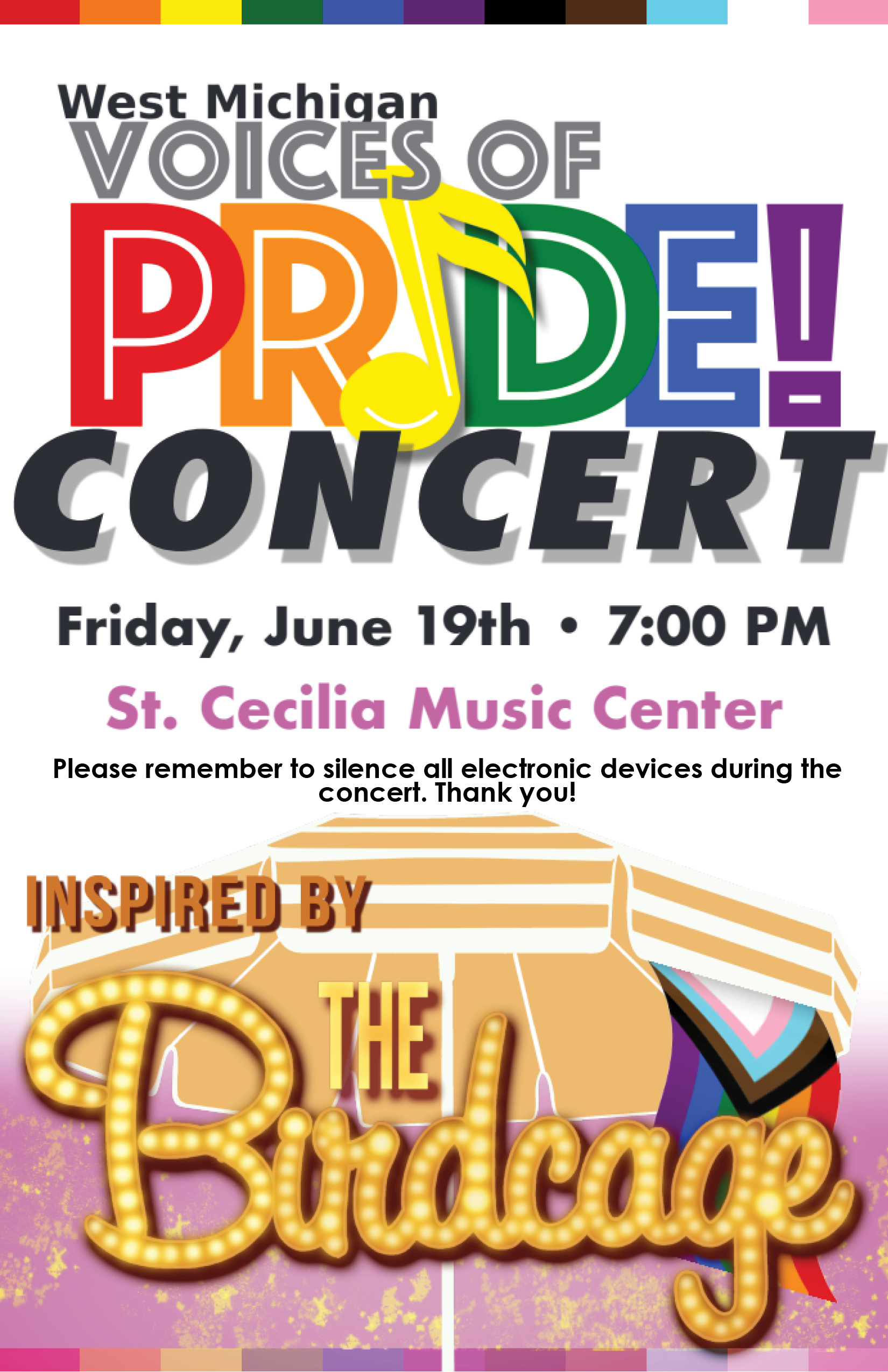
My dear friends, we are here for a celebration of Pride month. We of the West Michigan Voices of Pride are honored to be here with all of you to kick off Grand Rapids Pride Festival 2026. But today marks another very important day for another marginalized community, and we would be remiss not to recognize that. Juneteenth is the celebration of the official end of slavery in the United States, when Major General Gordon Granger ordered the final enforcement of the Emancipation Proclamation in Texas at the end of the American Civil War on June 19th, 1865, thus bringing an end to one of the darkest chapters of our nation’s history. For that reason, we celebrate alongside our black siblings, and we look back at some of the many ways that black history is inextricably linked with the history of LGBTQ+ people.
Today, I stand before you as a drag queen - a man dressed in traditionally feminine clothing. This is no new concept - we can trace the history of men dressing as women back for millennia, particularly in the theatre world. Then when did drag as we know it come to be? It turns out, we can trace it back to Harlem, New York, in 1869, when a fraternal organization of free black men threw a “drag ball” where men dressed as women as a celebration of their 25th anniversary.
Elsewhere in America around the same time, William Dorsey Swann was born into slavery in Maryland in 1860. He was still a young boy when slavery ended and he became a free man, and by the 1880s, he was the first one in recorded US history to identify himself as a “queen of drag.” In 1896, after being convicted and sentenced to 10 months in jail on the false charge of “keeping a disorderly house”—a euphemism for running a brothel—Swann demanded (and was denied) a pardon from President Grover Cleveland for holding a drag ball. This, too, was a historic act: It made Swann the earliest recorded American to take specific legal and political steps to defend the queer community’s right to gather without the threat of criminalization, suppression, or police violence.
100 years after the first known drag ball occurred in New York, in 1969, the Stonewall Riots occurred. Following her presence and participation on the front lines of these riots, Marsha P. Johnson became one of the most notable and outspoken advocates for trans rights, gay rights, and people with HIV/AIDS. Marsha, alongside hispanic drag queen Sylvia Rivera, founded Street Transvestite Action Revolutionaries, which has been cited as America's first trans political organization.
The list of figures goes on: Bayard Rustin was a key advisor to Martin Luther King Jr. and the lead organizer of the famous March on Washington. The first play produced on Broadway by an African American woman, “A Raisin in the Sun,” was written by Lorraine Hansberry, a black bisexual woman. Frances Thompson, a black woman, was the first transgender person to ever testify before Congress, way back in 1866.
Even today, some of the most prominent members of the LGBTQ+ community are black people. Famed television personalities such as RuPaul of RuPaul’s Drag Race, and Robin Roberts of Good Morning America. Jason Collins, an NBA player, who was the first player across any of the 4 major American sports to come out as gay. Musicians such as Keke Palmer, Tyler, the Creator, and Lil Nas X. Individuals whose fame stretches across the stage and screen such as Wanda Sykes, Cynthia Erivo, Billy Porter, and Alex Newell.
This is why queer history IS black history. The LGBTQ+ community as we know it today does not exist without the countless contributions of black individuals. We cannot stand apart from our black siblings in these times - now more than ever, we must embrace each other, support each other, and uplift each other to reach new heights, achieve equal rights, and win our fights for the future of all of us. As Marsha P. Johnson said, “no pride for some of us without liberation for all of us.”
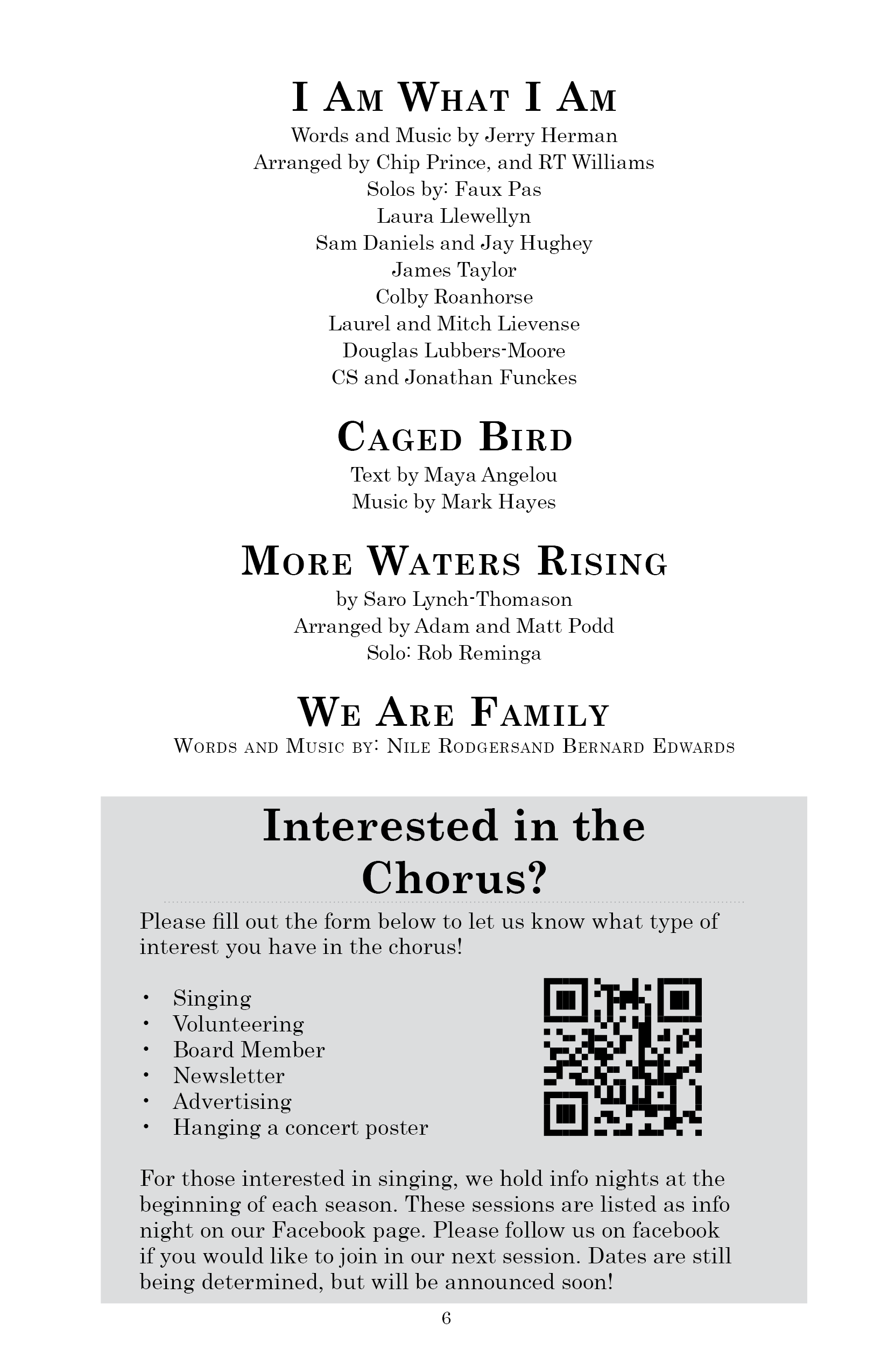
Our next piece, titled “Caged Bird” uses text from a poem of the same name by black author and LGBTQ+ Ally Maya Angelou. It tells the tale of two birds, one who is free to fly and call the sky his own, and one who is kept in a cage, with clipped wings and tied feet. While the free bird may sing to express his joy, there is no joy to be found in the oppressed life that the caged bird lives. So why then, would the caged bird sing? Because that is all he can do. He cannot soar across the sky like the free bird, so he sings for the day that he can. A caged bird sings for the hope of better days, for a freedom unknown to it, for the belief that there is a better life out there waiting to be lived. Today, on Juneteenth, solidarity with our black siblings and recognition of their ongoing struggle is Why We Sing.